
Hub One

Manipulation

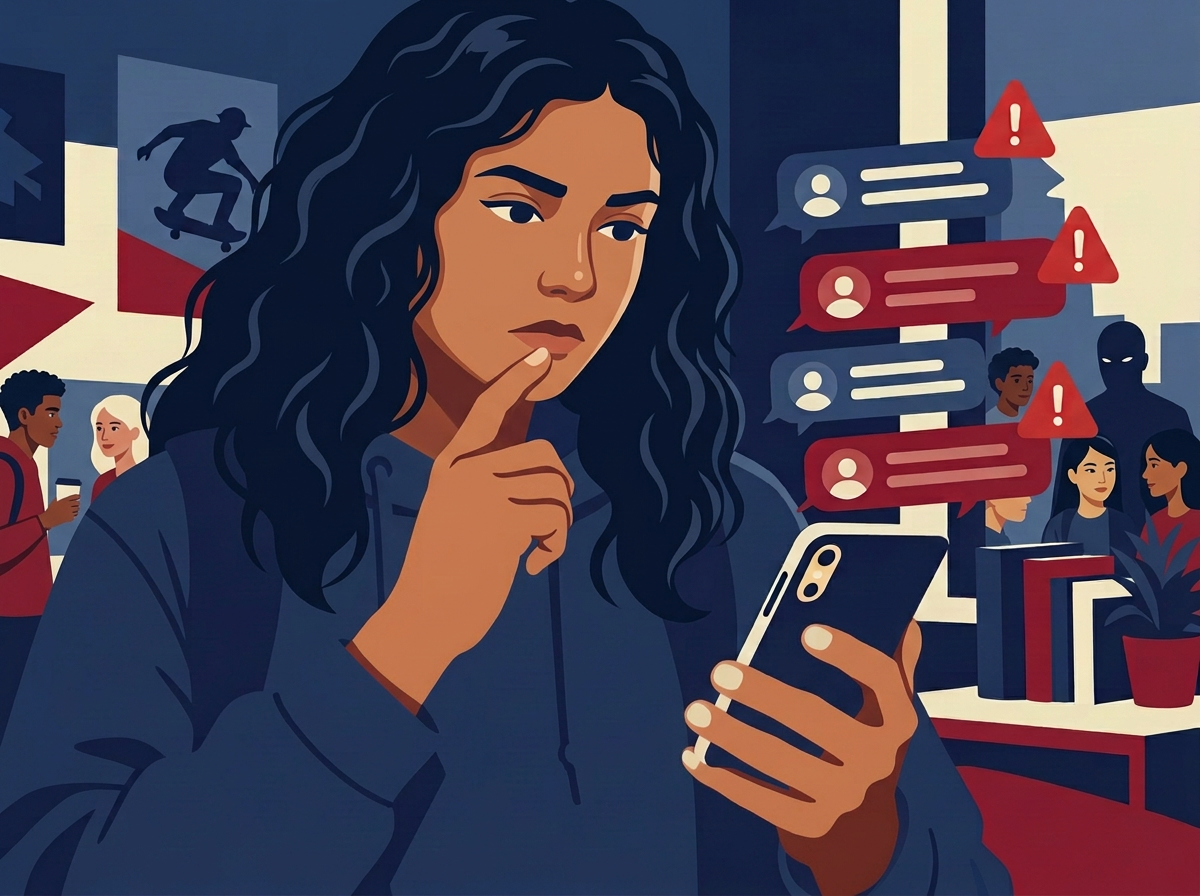
Everything else in this guide starts here. Online, the other person decides what you see, what you hear and who they claim to be. You can assume you know them, but that assumption is exactly what they count on.

Subject 01

They Are in Control

Online, the other person controls the whole story

  • The person on the other side of the screen chooses their name, photo, age, voice and story. You only see what they want you to see.
  • Photos can be stolen, profiles can be bought, and voices and videos can be faked with AI tools.
  • They set the pace: when to be sweet, when to ask for something, and when to apply pressure.
  • The goal is to make you feel like you are the one making decisions, when you are really following their script.

Subject 02

You Think You Know Them

Familiarity online is not the same as trust

  • Talking every day for weeks can feel like a real friendship or relationship, but time spent chatting does not prove who someone is.
  • Manipulators mirror your interests, music, problems and humor so you feel understood.
  • They can change on you in a moment: kind one minute, demanding or threatening the next.
  • If you have never met them in person with a trusted adult involved, treat them as a stranger.

How the switch usually happens

  1. Hook

    Compliments, attention and shared interests make you feel special.

  2. Isolate

    “Don’t tell your parents, they won’t get it.” Secrets create distance from people who could help.

  3. Ask

    A small favor, a photo, a code, a little money, a private chat on another app.

  4. Flip

    Once they have something, the tone changes to pressure, guilt or threats.

Subject 03

Warning Signs

Slow down when you notice any of these

  • They want to move the conversation to a private or disappearing-message app.
  • They ask you to keep the relationship secret.
  • They rush you: “right now”, “you have two hours”, “if you really cared you would…”
  • They ask for photos, codes, passwords, gift cards or money.
  • Their story has gaps, or they always have an excuse to avoid a live video call.

Informed decision making

You do not have to prove someone is dangerous before you stop talking to them. You are allowed to leave any conversation, at any time, for any reason.

Need help now? Call or text 988